
Lifestyle
Soulja Boy Says Air Jordan 13 “Flint” Inspired His Hit “Crank That”
Feb
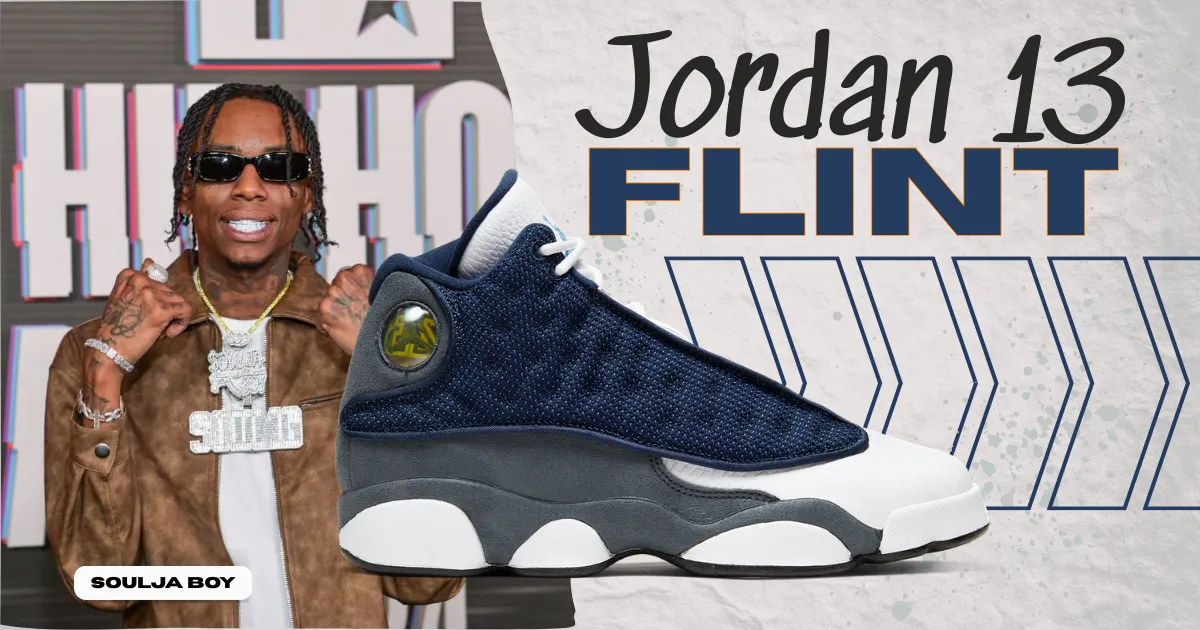
When it comes to sneaker culture and hip-hop, few stories illustrate the connection between aspiration and success quite like this one. According to Soulja Boy, the Jordan 13 “Flint” played a role in motivating him during the early stages of his career – ultimately influencing the creation of his breakout single, Crank That (Soulja Boy).
In a recent interview, the rapper reflected on wanting a pair of the “Flint” 13s at a time when he couldn’t easily afford them. That desire, he explained, pushed him to focus more seriously on making music.
“I feel like these shoes was the shoes that made me hustle and go get it.”
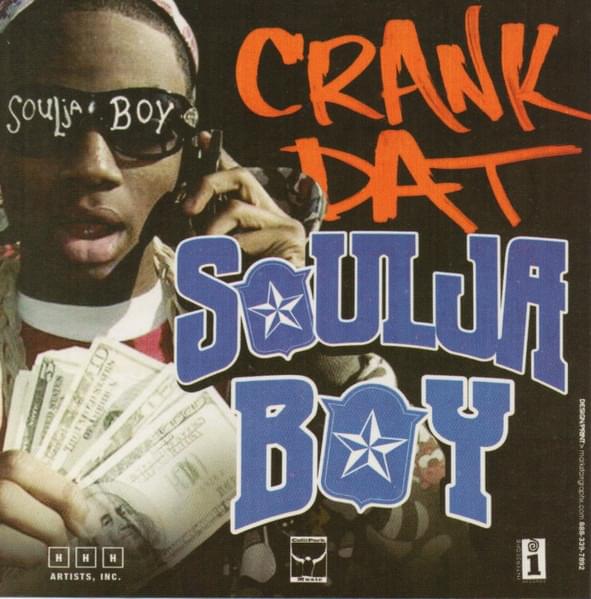
Released in 2007, “Crank That” would go on to top the Billboard Hot 100 for seven non-consecutive weeks, marking one of the earliest examples of a viral rap record fueled by internet momentum.
A Sneaker With Cultural Weight
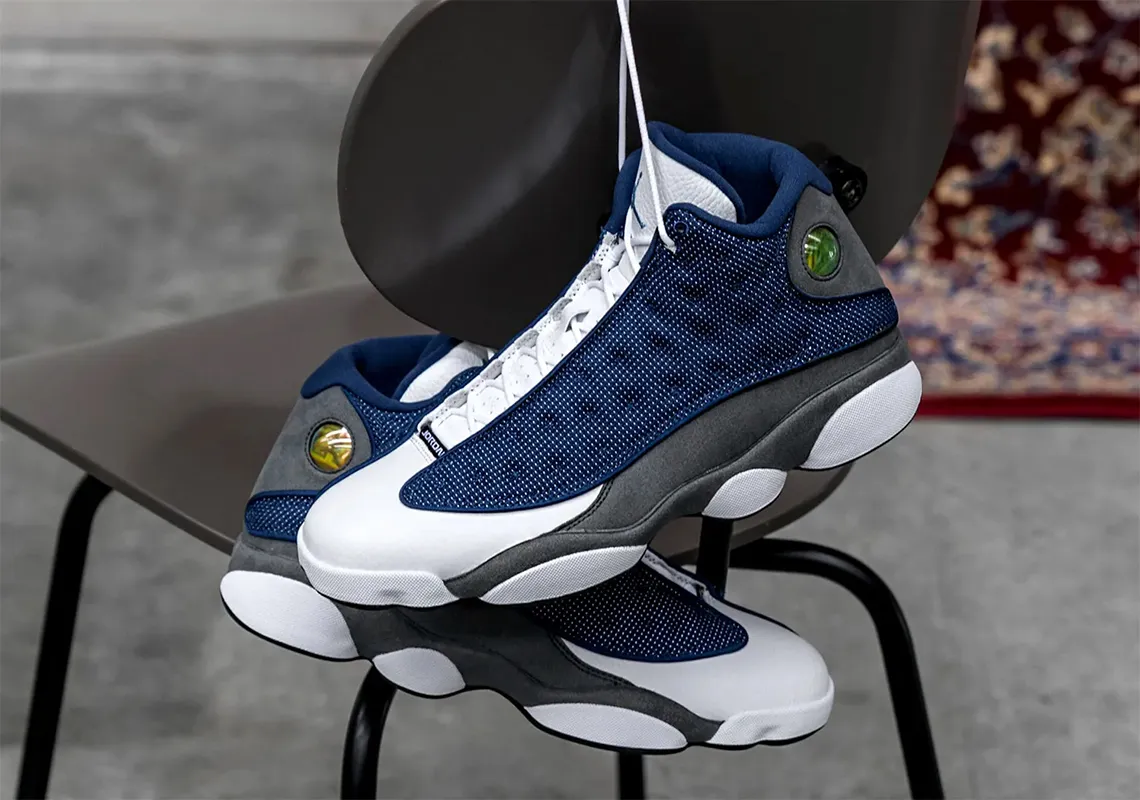
Originally released in 1998, the Jordan 13 was worn by MJ during his final championship season with the Chicago Bulls. Designed by Tinker Hatfield, the model was inspired by Jordan’s “Black Cat” persona and featured distinctive elements such as reflective mesh panels and the holographic “cat eye” emblem.
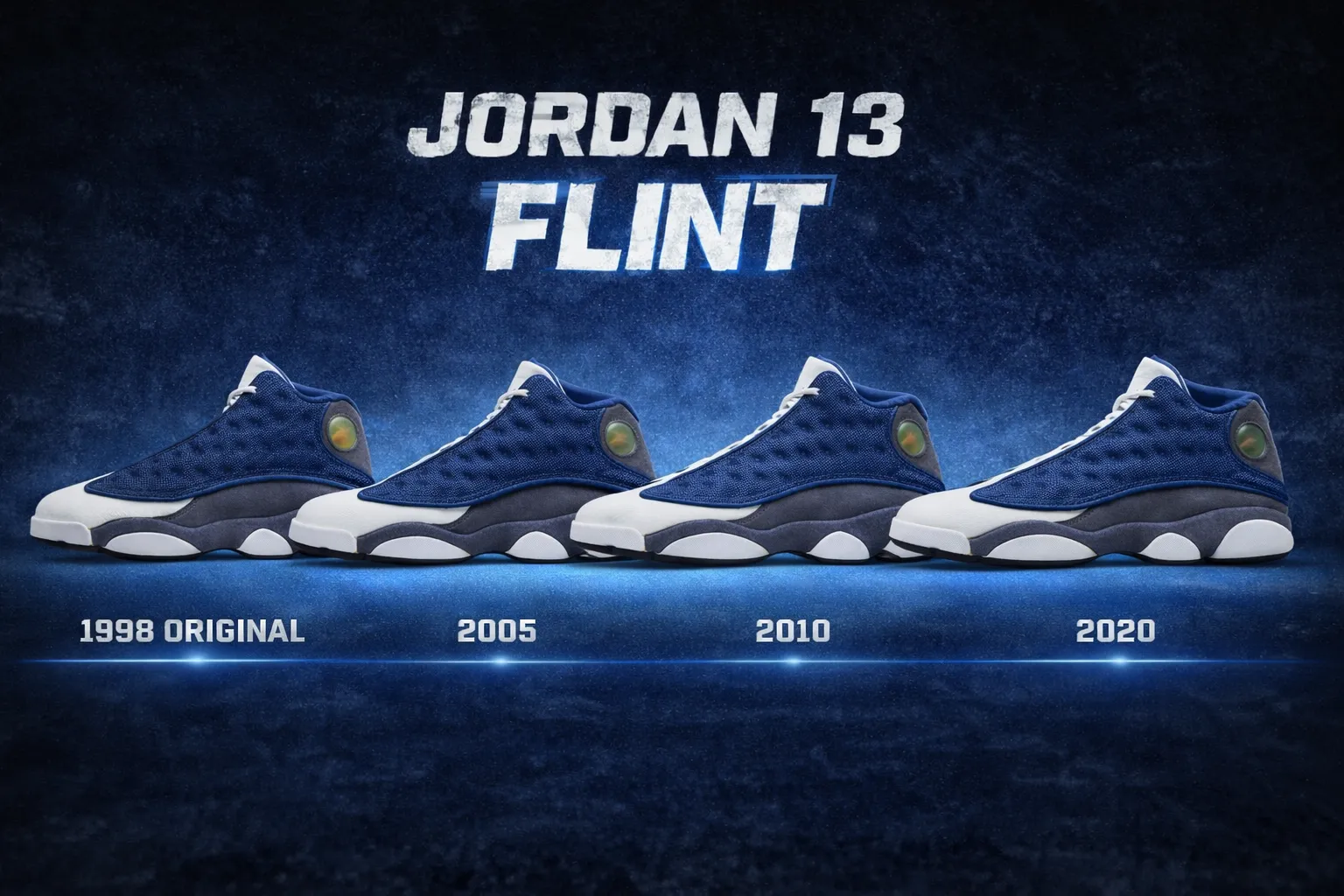
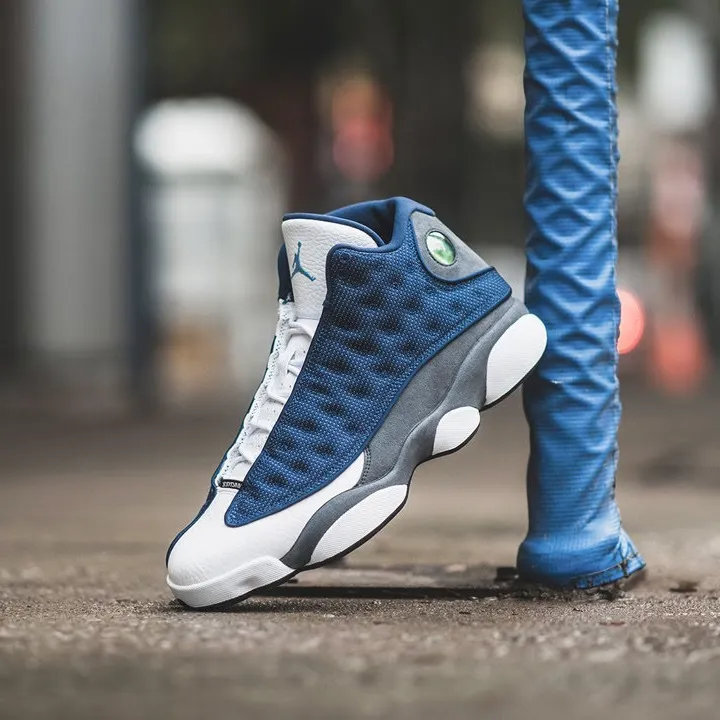
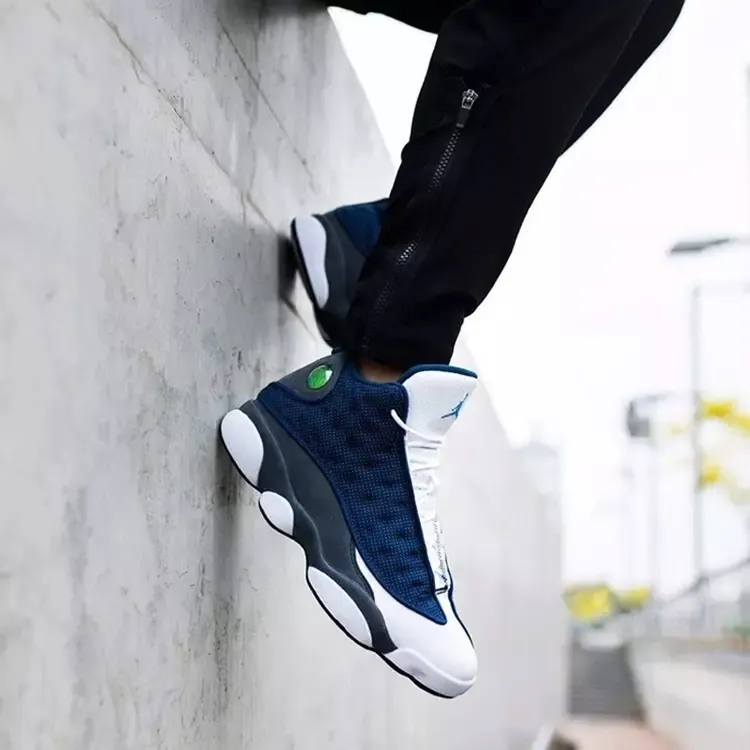
The “Flint” colorway, with its grey suede overlays and navy upper, became one of the most recognizable iterations of the silhouette. Over multiple retro releases, it has maintained steady relevance in both basketball heritage and streetwear fashion.
Sneakers, Aspiration, and Early Internet Rap
Soulja Boy’s reflection underscores a broader reality in American sneaker culture: footwear often symbolizes upward mobility and status, particularly within hip-hop communities. For many young artists in the 2000s, a pair of Jordans represented more than style – it represented success.
While the Jordan 13 “Flint” did not literally create “Crank That,” the motivation tied to wanting the shoe contributed to the hunger that defined Soulja Boy’s early work ethic.
Nearly two decades later, both the sneaker and the song remain cultural touchpoints of the mid-2000s era.
